
What Is “Dual Laminate” Fabrication?
In the increasingly broad and dynamic corrosion protection industry, there are a wide variety of problems in safely and reliably moving and storing corrosive chemicals. Naturally, there is also a variety of materials that engineers can choose from depending on their needs. Fiberglass reinforced plastic (FRP) is mechanically tough, but lacks superior chemical resistance. Thermoplastics—including fluoropolymers like ETFE and engineering plastics like PVDF—offer excellent corrosion protection, but they lack mechanical strength. High nickel alloy metals offer both structural integrity and chemical resistance, but are much harder to work and usually come at a much higher price.
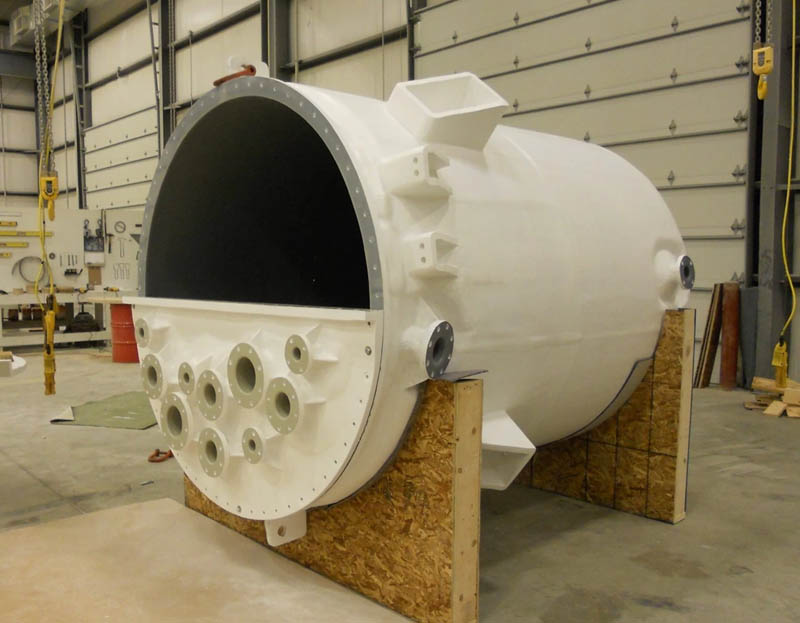
This is where dual laminate fabrication comes in. Dual laminates combine the reliable corrosion protection of an interior plastic liner with the structural integrity and durability of FRP fiberglass reinforcement. In combining these two materials, you get the best of both worlds. Dual laminate equipment is lightweight and durable, and able to operate in harsh conditions or extreme temperatures where metal or plastic alone would fail. Unlike metal tank exteriors, which often corrode over time—think municipal water towers—the FRP exterior of dual laminates offers exceptional durability. They also provide a lower-maintenance alternative to glass-lined, rubber-lined, and brick-lined systems.
Another advantage of dual laminates is that they can be shaped into an unlimited number of configurations. Unlike metal, which which offers inherent geometric restrictions, dual laminates can be formed and shaped into any conceivable configuration, making them an ideal choice for custom parts that would be difficult to find or fabricate elsewhere. Unlike metal pipes, which can only be made to certain lengths, dual laminate piping can be fabricated to any length a single continuous run without the use of flange connections. This can reduce or eliminate the need for flanges, which often prove problematic for long-term maintenance and reliable leak prevention.
And most importantly, dual laminates are cost-effective, especially when compared to high nickel alloy metals. Not only are the raw materials more affordable, but the equipment needed is less specialized and less expensive. This makes dual laminate fabrication an attractive option in a wide variety of applications, as they offer extreme chemical resistance, mechanical toughness, durability, and ease of fabrication, all at an unrivaled value.
Advantages of Dual Laminate Materials
- Lighter Weight
- Longer Service Life
- Lower Maintenance Cost
- Interior / Exterior Corrosion Resistance
- Flexible fabrication of shapes - unlimited possible geometries
- No scale restrictions - capable of supporting very large tanks and structures
- Plastic and FRP resins can be sourced to precisely fit the end-use case
Types of Equipment Manufactured
- Tanks
- Pipes
- Storage & Process equipment
- Pipe Spools
- Headers
- Fittings
- Scrubbers
- Specialized Components
Dual Laminate Fabrication Process
The first and most important step in the dual laminate fabrication process is selecting the right materials with the right properties for the job at hand. Our Corrosion Guide is a great place to start, but bear in mind that material specifications on paper can only tell half the story. We recommend finding a member company in our Member Directory whose experience and expertise can help you choose the right plastic and the right FRP resin for the job.
Once the plastics and FRP resin have been sourced, the fabrication process begins by forming and welding the thermoplastic linings (in roll or sheet form) into shape. Welding technologies include hot gas hand welding, flow fusion machine welding, and butt fusion machine welding. Typically, these thermoplastic sheets or rolls are fabric-backed, which provides a better surface for the adhesive that joins the fabric to the fiberglass.
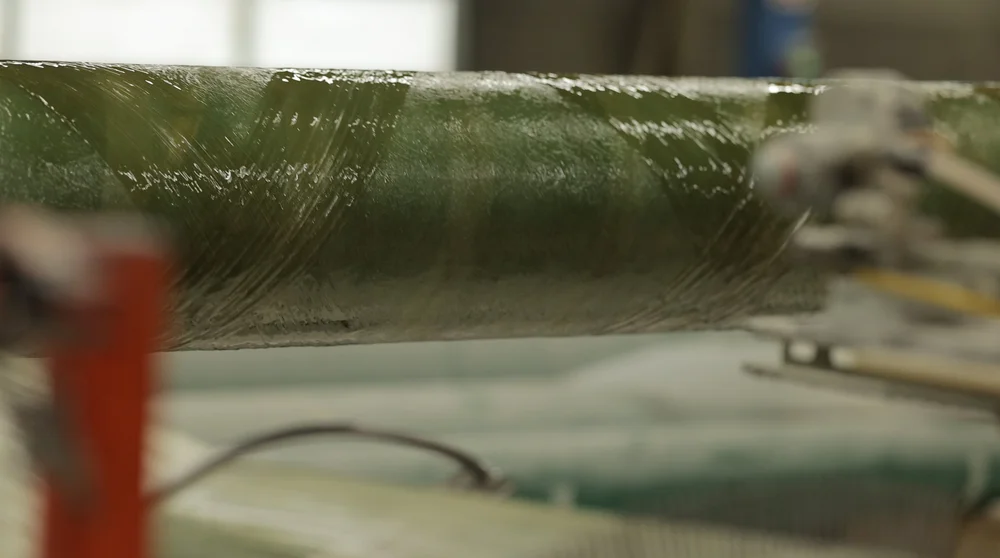
Once the lining is complete, it is internally supported and FRP is chemically or mechanically bonded to the lining. The FRP bond to the thermoplastic lining must have minimum climbing drum peel strength of 50 in.-lb/in. when tested per ASTM D 1781. Typical methods include filament winding (i.e. wound around a spinning mandrel), hand layup (which requires a skilled operator to perform), or vacuum infusion molding processes. This FRP layer is then typically treated with a corrosion-resistant barrier that provides secondary corrosion protection behind the thermoplastic lining.
The piece is then tested to ensure that there are no gaps or weak spots along welded areas. A conductive carbon veil layer is integrated into the FRP corrosion barrier to facilitate high voltage spark testing of the lining. The conductive target should cover 100% of the lining.
Interested in using dual laminate materials in your next project? Visit our Member Directory to find a company (or companies) that can help you find success with dual laminates!
Markets Served
- Chemical Processing
- Energy
- Mining
- Oil & Gas
- Pharmaceutical
- Pollution Control
- Power
- Pulp and Paper
- Semiconductor
Industry Standards
Dual laminates are applicable to several ASME codes and standards related to FRP vessel design and fabrication. The ASME RTP-1 Standard for Reinforced Thermoset Plastic Corrosion Resistant Equipment provides comprehensive coverage of dual laminate construction. Dual laminate vessels can be stamped with the ASME RTP-1 mark. Vessels stamped per Section X of the ASME Boiler and Pressure Vessel Code are also available with dual laminate construction.